Core design challenge
The main challenge was designing a permission system that worked for:
-
Operational users (store-level)
-
Administrative users (organization-level)
Without overwhelming users or enabling unsafe configurations.
I led the design system adoption (Shadcn + Tailwind) in this project:
Partnered with engineering on tokenization, documented component usage in Figma, and set guidelines for the product design team, enabling a consistent and scalable UI.


What works today
-
Clean and structured layout
-
Clear visual separation of sections
-
Strong operational value after setup
-
Clear ownership of responsibilities
High-impact Opportunities
-
Predefined operational roles
-
Clear differentiation between PIN and email access
-
In-product guidance for first-time setup
-
Explicit post-configuration feedback
-
Messaging that reinforces operational value
Context
Before this redesign, user management in Parrot currently operates at a store level. This limits and complicates usage for organizations with multiple locations because:
-
Organization-level permissions didn’t exist as first-class entities
-
Users were duplicated across stores, requiring manual updates per location
-
Roles were defined per store, forcing duplication across the same organization
-
No visibility into which users or roles had access to which stores
-
No clear organization admin role for end users
-
High cognitive load during onboarding for administrators
This resulted in friction, errors and high operational effort, especially during onboarding.


Goals
-
Support tickets related to the Staff module: If the redesign works, customers should not have to contact support to set up users and should be able to do it independently.
Role
Product designer:
UX flows, information architecture, permission system modeling, UI design for complex systems, iteration based on user interviews, edge cases and guardrails.
Tools
Figma, Notion, ChatGPT, user interviews.
Conclusion
Personal V3 is functional and valuable, but it needs to help users understand it before they use it.
Key Design Decisions
Separating Users and Roles:
-
Roles define permissions and capabilities.
-
Users inherit behavior from assigned roles.
-
Organization and Store scopes coexist but are clearly separated.
This enabled scalability and reduced duplication.

Permission grouping by context
-
Permissions grouped by scope (Organization / Store).
-
Tabs used to reduce cognitive load.
-
Switches and checkboxes combined based on permission type.
-
Store permissions prioritized over organization permissions based on real usage patterns.
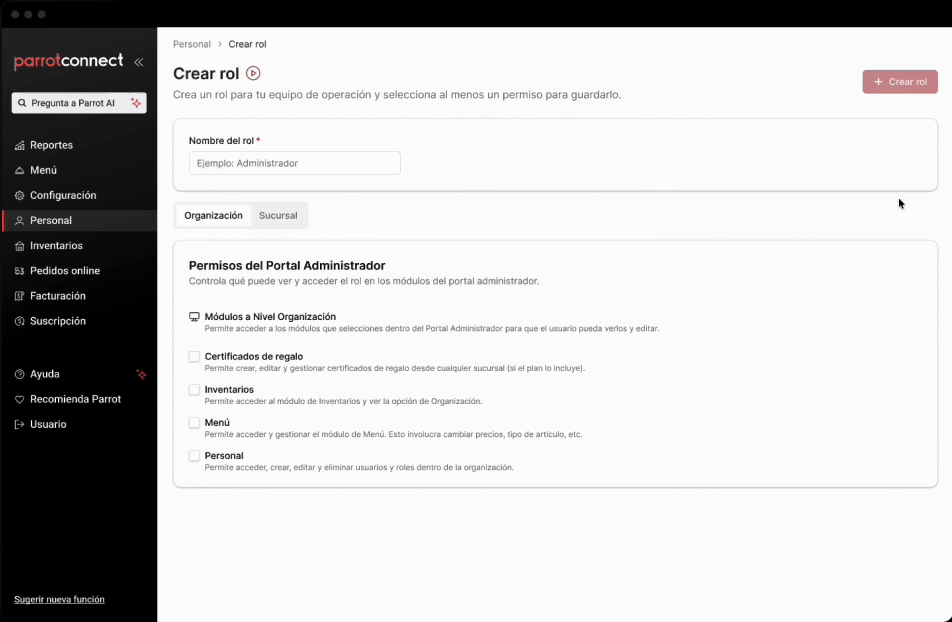
Create role and activate permissions
Role-dependent inputs
During user creation:
-
Email, password and PIN fields are locked by default
-
Fields are dynamically enabled based on the selected role
This communicated that credentials are role-dependent, not optional.
Interviews revealed that while the UI builds trust, understanding remains a challenge, highlighting future improvement opportunities.
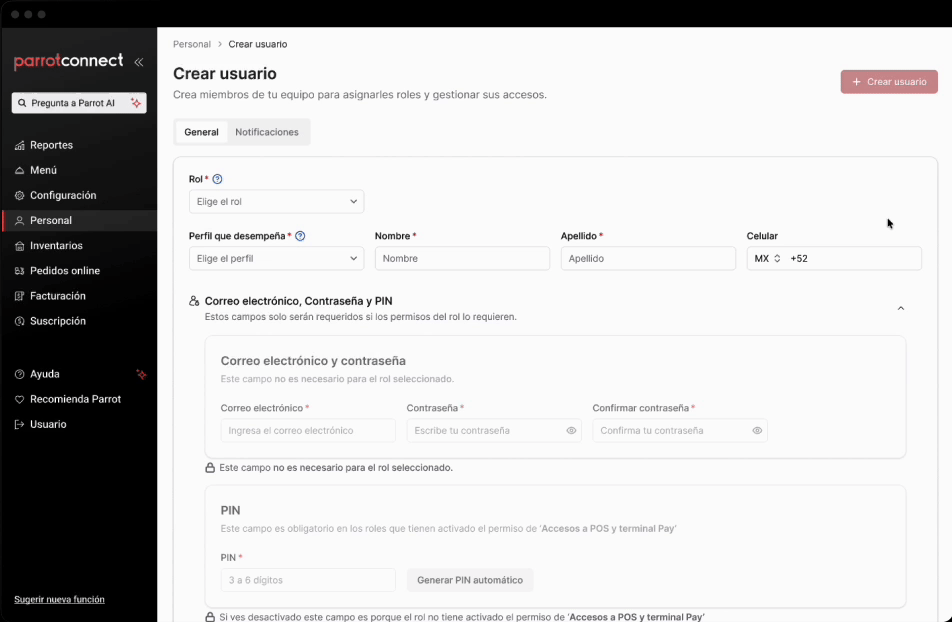
Create user and asign role
-
Create role with store and organization permissions
-
Create user and assign role
-
Edit role with associated users
-
Auto-generated roles from users
-
Edge cases such as deleting roles with assigned users
Core flows

Results
-
Enabled a scalable organization-level user and permission model.
-
Reduced duplication of users and roles across stores.
-
Improved onboarding speed and configuration consistency.
-
The module’s value becomes clear once real operations begin.

The problem:
Parrot administrators need a centralized space to manage users across their organization.
Permissions must clearly and transparently define what each user can do, avoiding confusion and unnecessary dependencies.
Impact: reduce support tickets related to the Personnel module.
Teams involved: Product, Engineering, Sales, Onboarding, Support, Marketing, Acquisition.
